

 I am proud and grateful to be beginning my 24th year of using the Aesthetic Realism Teaching Method. I know with every fiber of my being that this method can defeat the hurtful, even deadly anger in students. I have seen thousands of students who were hard-bitten and angry change — learn with enthusiasm and success, and become kinder, as they have studied science in relation to this principle stated by Eli Siegel, the founder of Aesthetic Realism: “The world, art, and self explain each other: each is the aesthetic oneness of opposites.”
The purpose of education, Aesthetic Realism shows, is to like the world. And there is a mathematical relation between increased like of the world and a decrease in one’s anger. Young people today suffer from a horribly unjust economic system. They cannot find jobs and the future looks bleak. When I asked my students at LaGuardia High School how many of them were afraid to go out on the streets near home, more than half of the class raised their hands. Ariadne said, “Once I get home, I’m not allowed out again because of the shootings around my way.”
Yet every teacher and student needs to learn from Aesthetic Realism that there is a hope in a person to have contempt — despise the world and use what one endures to feel justified in doing so.
I am going to tell about a class I gave to 9th grade students on Environmental Science. Early in the term, I heard a Hispanic student call an Asian girl “wonton.” Students told one another, with great gusto, “Why don’t you shut up!” At times two students would exchange threatening words clear across the classroom. They were quick to insult and be insulted, making the atmosphere in the classroom often tense.
Before my study of Aesthetic Realism, I was angry, often intensely — I didn’t know why — and it frequently included my students. First in Aesthetic Realism consultations, and later in classes with Eli Siegel, I learned the cause of my anger and why it could even be so attractive. In an Aesthetic Realism class Mr. Siegel asked me these kind and critical questions:
Eli Siegel: You can get yourself into a state of wrath easily?
Rosemary Plumstead: Yes, I can.
Eli Siegel: Most people can. We like [being angry] because it establishes our personality. Have you fancied yourself right when you are angry?
Rosemary Plumstead: Yes, I have.
Eli Siegel explained, “There’s hardly an anger that doesn’t have something right about it, but do you want to be clear?”
It will take a lifetime to express how grateful I am to Eli Siegel and Aesthetic Realism for criticizing my desire to be angry and for lovingly encouraging in me the only opposition to unjust anger: the desire to know and like the world. What I learned and continue to learn in Aesthetic Realism classes taught by Ellen Reiss, Aesthetic Realism Chairman of Education, has made me a happy person and a useful teacher.
Expansion and Contraction in Trees
As students in my science classes see — through study of the atom, or the formation of ozone — that the world, with all the unjust things that take place in it, has a structure of opposites that is beautiful, they learn happily and their anger with things and people changes.
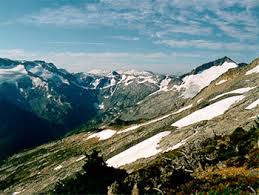
As part of the Environmental Science curriculum, for example, we study biomes — areas of the world that are characterized by their vegetation, like the tundra where, because of intense cold, there are no trees and the vegetation consists of short grasses and shrubs.
In the tropical rain forest, however, the temperature is very high and the vegetation lush, due to the copious amounts of rain the area receives.
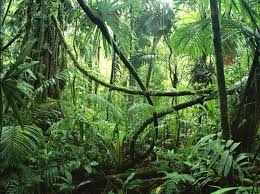
As students see that the very earth is a diverse and exciting relation of opposites such as warmth and coolness, wet and dry, the lush and the sparse, they are seeing evidence that the outside world is interesting, exciting, made in a thrilling, logical way. Further, they see that the same opposites that make such a variety of vegetation are in oneself. We can be cold and hot, stingy and generous, like the tundra and the rain forest. A person will NOT want to be angry with or attack a world he or she sees as like oneself, as having a good meaning for oneself, and every subject can provide limitless evidence for the fact that the world has a structure of opposites like our own, which we can learn from.
Two lessons that affected these 9th grade students very deeply were about trees. They learned that it is in the leaves that photosynthesis takes place and a tree makes its own food. I asked the class, “What position is it best for the leaves to be in so that photosynthesis can take place?”
Fred said, “Flat, so the sun can hit as much of the leaf as possible.” Yes, we saw that for the tree to be strong the leaves have to be wide and expansive.
However — I then read this by Steven Vogel from Natural History:
[In] violent gales, the sideways drag of the leaves in the wind becomes a threat…. The tremendous surface area of leaves becomes a major liability.
When I asked the class how they thought trees solve this problem, everyone was thoughtful and actively involved. “They get rid of the leaves,” Manny said. “They can’t just do that,” Maria objected; “they need the leaves.”
The students were thrilled to see that the answer lies in aesthetics — the leaves have to put opposites together in order for the whole tree to fare well. In order to find out what the leaves actually do in gale-force winds, Steven Vogel created a wind tunnel and subjected the leaves to different wind speeds. I showed my students a slide of the leaves of a tree and asked, “What do you notice about the leaves at zero miles per hour?” Rick said, “They’re spread out flat.”
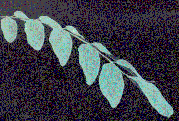
“What happens as the wind increases?” I asked, showing a slide of leaves in wind. “Oh, wow!” Max called out, “They’re curling up.”
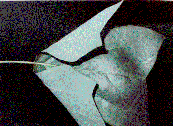
My students were enthralled seeing this: how the same leaf that was expansive could fold and contract in order to minimize the wind’s drag; how opposites, expansion and contraction, power and delicacy, work together for one purpose. “That’s crazy good!” Umberto called out.
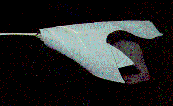
“Do you think,” I asked, “we’re trying to put together the very same opposites of contraction and expansion, that these leaves are?” As I read this passage about a young woman, Hilda Rawlins, from Self and World by Eli Siegel, looks of recognition came to their faces.
On June 4th, Hilda went to bed feeling — quite sincerely — ill, and told her mother she did not wish to answer telephone calls, receive visitors, or read letters …. She remained in bed until June 9th, talking to no one except her mother, and with her curtly …. On June 9th, Hilda had a sudden desire to see people, to talk to them, to have them near, near to her. She flung the bed clothes off her. She called up friends. She talked buoyantly, raptly. She went out.
“I’m like that,” Tania said, “when I’m sad I keep to myself. When I’m happy, I open up. I go places and I hang out with my friends.” And Felicia said, “When I am angry, I could only think about what’s wrong — draw together all my anger.” I asked, “Do you think we can learn from the leaves of a tree how to have these opposites one in our own lives?” They said, “Yes.” I said, “The leaves have the same purpose in expanding as in contracting — and it is for the well-being of the tree.” As my students saw that opposites which they were pained and confused by every day are beautifully made one by the leaves of the tree, a deep anger was being countered — because they had more respect and admiration for the world itself — and they were very pleased and excited. On the way out of class, Jaime said, “This was a good lesson by Mrs. Plumstead.”
A Tree Puts Together the Opposites of Individuality and Relation, Generosity and Withholding, Strength and Gentleness
We continued to study trees, using an article from The New York Times Science section titled, “Plants Share Precious Water With Neighbors” by Carol Kaesuk Yoon. It has been known by scientists that water moves up the roots of plants and trees and then evaporates out through the leaves. But it seems that a new phenomenon has been observed. We read these sentences: In the night, many plants pull water up from deep in the earth, and rather than holding on to it to pass through their leaves the next day, they flush it out through their shallow roots into the ground around them …. Plants ranging from sagebrush in the arid steppes of Utah to sugar maples in the rainy forest of upstate New York appear to be acting as subterranean watering systems, drenching the soil and their thirsty neighbors [ — bushes and grasses].
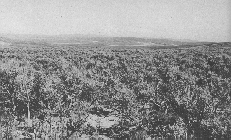
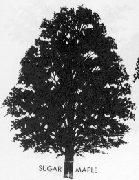
This phenomenon — the ability of the plant or tree to pull up large quantities of water from deep roots into more shallow roots — is called hydraulic lift. “What do you think of this?” I asked the class. “They’re not selfish,” Monica said with pleasure. Mabel, who can be very tough, said with emotion, “That’s sweet.” I pointed to the fact that this is not just in areas where there is excessive water, but in areas where the water is precious to every plant. “Why do you think the trees do this?” I asked. My students weren’t sure. “Maybe they have enough water for themselves and so they don’t need it,” Tony commented. “Why not hold onto the water in the roots?” I asked. “Maybe it’s good for the tree if other plants have water,” Sonia said uncertainly. She was right. The presence of other living things near the tree, enriches the soil — keeping it moist, adding to the nutrients in it, and crucially stopping the soil from eroding when there is rain. I asked, “Does this show something organic in nature — that in having other vegetation stronger, the tree itself gets strength?” Yes! They thought that it did. “Is this how we are?” “No,” Tony said, “we’re too greedy.” “Does this mean,” I asked, “that how we act is in keeping with the nature of the world or against it?” “Against it,” they said. “We’re seeing an instance,” I continued, “of how opposites can be beautifully one in reality — generosity and selfishness, strength and gentleness, justice to oneself and to the world.
They Learn and Are Kinder
Because of Aesthetic Realism, the classroom atmosphere became no longer charged, but friendly. Karen told me, “I never really liked science until I learned this way of teaching.” Agatha, who had been very angry at the beginning of the term, and who was repeating the course, began to help Soo learn vocabulary words in science, and Soo has taught her how to write her name in Korean. Agatha, who had painfully told the class that she couldn’t pass science tests, is now doing so with ease. In fact, 96 percent of these 9th grade students passed the RCTs (Regents Competency Test) in science — in a school system where there is so much failure! All my students are kinder, less angry. Shawn said:
This class has really changed the way I look at certain things. Just today I bumped into someone in the hall and I just turned around and apologized and he was very angry. So me, not trying to have contempt for him, I apologized again and he was stunned. It was as if no one ever apologized to him before. In the past, I would have said to him, “What’s your problem?” and we would have gotten into a fight.
Rather than show their own tremendous respect for Aesthetic Realism, persons of the press prefer that children have stunted lives and maim and kill each other. It is my intention and that of my colleagues to have this kind, practical, and life-enriching way of seeing education, come to by the great educator, Eli Siegel, known truly throughout America.
Note: Rosemary Plumstead teaches science at LaGuardia High School in New York City. She is an Aesthetic Realism consultant to women and one of the instructors of The Aesthetic Realism of Eli Siegel as Teaching Method. Mrs. Plumstead studies in classes taught by Ellen Reiss, the Aesthetic Realism Chairman of Education.